
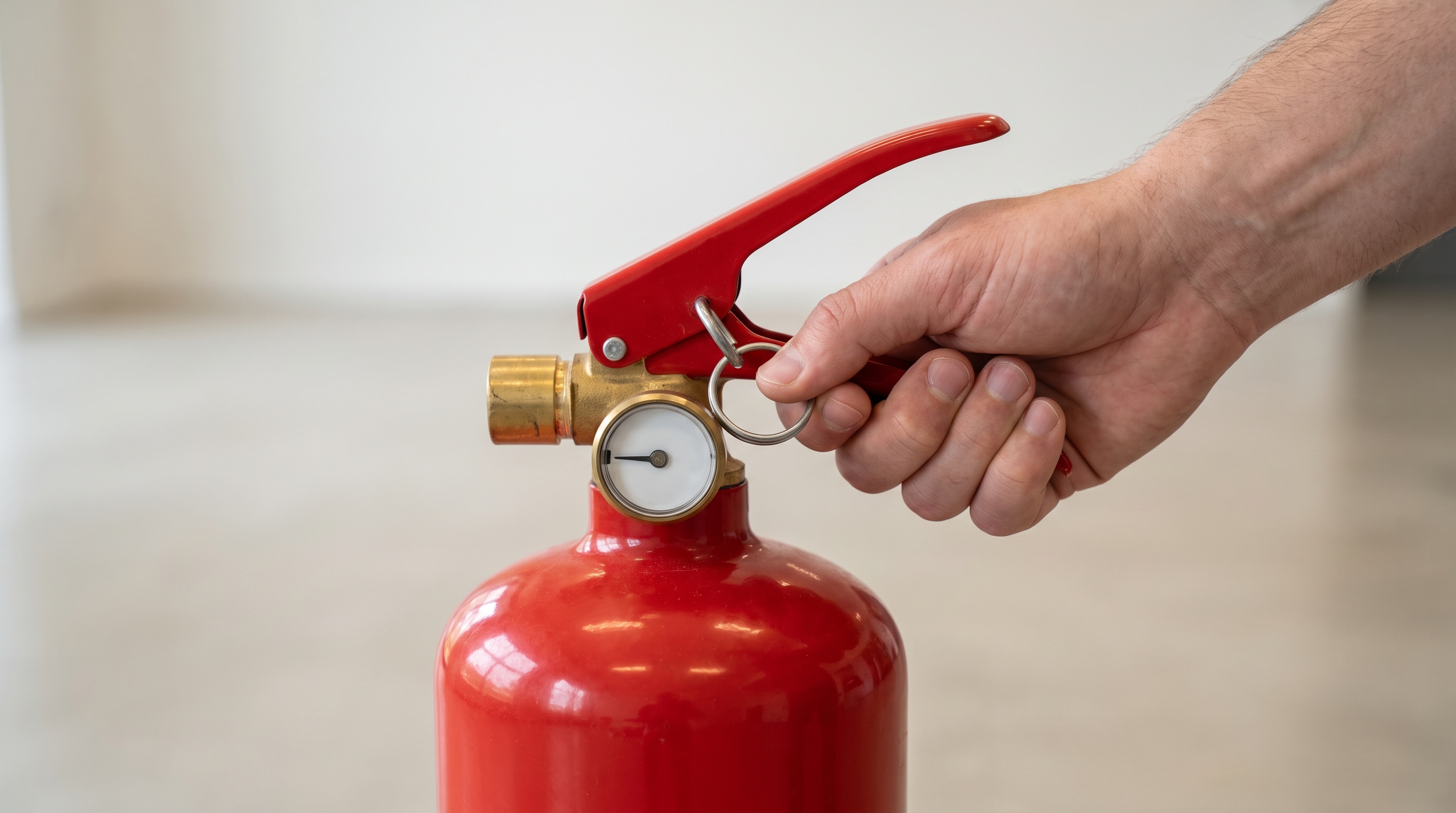
VR fire safety training lets people practise the part a classroom can't: choosing and using the right extinguisher under pressure, in seconds. It works best for that first decision, and mixed reality goes further by putting the fire in your own building. It doesn't replace your fire risk assessment, drills or fire warden training. It makes the practical part stick.
Why fire training is hard to make stick
Most people will never use a fire extinguisher until the day they need one. When that day comes, the decision takes seconds: what is burning, which extinguisher is right for it, how to use it, and when to stop and leave.
Classroom sessions cover the colours, the labels and the classes of fire, and most people forget them within weeks. Live-fire practice is far more memorable, but it needs outdoor space, kit and someone qualified to run it, so it happens rarely and reaches few people.
What VR adds
In VR, people practise the whole decision rather than hearing about it. They identify the type of fire, choose the extinguisher, pull the pin, aim at the base, squeeze and sweep, and see what happens when they get it wrong, without anything real catching light.
Because the scenario is repeatable, everyone gets the same quality of practice, as many times as they need. And because it is digital, it records how each person did: the time taken, whether they chose the right extinguisher, and where they hesitated.
Mixed reality: the fire in your own building
Mixed reality goes a step further. Trainees see their real surroundings through the headset, with a virtual fire placed in them. For THG Labs we built fire extinguisher training that runs inside its own facility, with real extinguishers tracked in the trainee's hands, so people practise where a fire would really happen and with the kit they would really use.
How it works at scale
Fire training often has to reach a lot of people in very little time. At NSK Europe's annual Safety Day, 53 employees went through our VR fire extinguisher training in a single day. Each participant had to identify and put out five types of fire against the clock, in 15-minute sessions for groups of four, with one person in the headset and the others watching and learning from each attempt.
We are now building immersive fire safety training for Whitbread's Premier Inn hotels, set in captured hotel spaces and running on headsets and tablets, with results feeding into Whitbread's learning system.
Where it fits in a fire safety programme
VR is the practice layer, not the whole programme. Your fire risk assessment, evacuation drills, fire warden training and the legal duties around them all still apply. What immersive training adds is confidence: people who have already put out a virtual fire with the right extinguisher are far more likely to act correctly, or to leave, when it matters.
What to look for
A real extinguisher, or a tracked prop that handles like one, so the technique transfers. Scenarios that match the fire risks on your sites, not a generic office. Your own environment where possible, through reality capture or mixed reality. Results you can report on, ideally in your existing learning system. And a setup your own team can run without us in the room.
Getting started
Start with your highest fire risks and the places they are most likely to happen. That tells you which scenarios matter, which extinguishers people need to practise with, and whether a headset, a tablet or mixed reality is the right format. If you're working through that, we'd like to hear about it.

Jamie founded Boundless Immersive in 2019 and has spent more than 20 years working in 3D, CAD and immersive technology.